Wireless audio is useful, but it does not make every commercial sound system simpler. A phone-to-speaker connection, personal listening in a public venue and a multi-zone paging system have different engineering requirements. The right question is not “wireless or wired?” but which parts of the signal path benefit from wireless operation and which parts must remain predictable.
Quick decision
| Requirement | Better starting point | Why |
|---|---|---|
| One local music source in a small room | Classic Bluetooth or a local wired input | Simple operation with a short, controllable signal path |
| Visitors listening on compatible devices | Auracast alongside the installed PA | Supports optional personal, multilingual or assistive listening |
| Fixed coverage across several rooms | Wired loudspeaker or managed IP distribution | Clear zone boundaries, power planning and service access |
| Temporary event audio or a wireless microphone | Purpose-built wireless link | Designed for mobility and a defined operating area |
| Emergency or life-safety messages | Approved, supervised life-safety system | Do not depend on consumer wireless devices or optional listener participation |
Compare the systems by the work they must do
Coverage and predictability
A wired loudspeaker circuit follows the installed cable route. Its coverage is designed from loudspeaker placement, power taps and room acoustics. Wireless coverage depends on the selected technology, transmitter location, building materials, nearby radio activity and the receiver being used.
Wireless does not automatically mean poor coverage, but it does mean coverage must be surveyed and tested on site. A quoted radio range is a starting point; it is not a guarantee for a concrete stairwell, crowded exhibition area or room separated by metal partitions.
Zones, latency and control
For a small room, one Bluetooth receiver may be enough. For several rooms, the project needs an answer to more questions: which zones receive the same programme, who can change volume, can a local microphone override music, and what happens after a controller restart?
Audio delay matters when listeners can also see a screen, a presenter or another loudspeaker system. Do not promise lip-sync or live-performance timing from a technology name alone; test the complete transmitter, receiver and display chain at the intended installation.
Reliability and maintenance
Every system needs a failure plan. A wired amplifier may lose a circuit; a wireless system can also lose its source, pairing state, access point, transmitter, receiver battery or radio path. Compare recovery process, not only the number of cables.
Wireless can reduce the need to pull an audio cable through a finished space, but active speakers and transmitters still need power, mounting, configuration and service access. A system that works only when one staff member’s phone is present is not a maintainable commercial installation.
Where wireless has a clear advantage
- a small room needs occasional background music from an authorized local device;
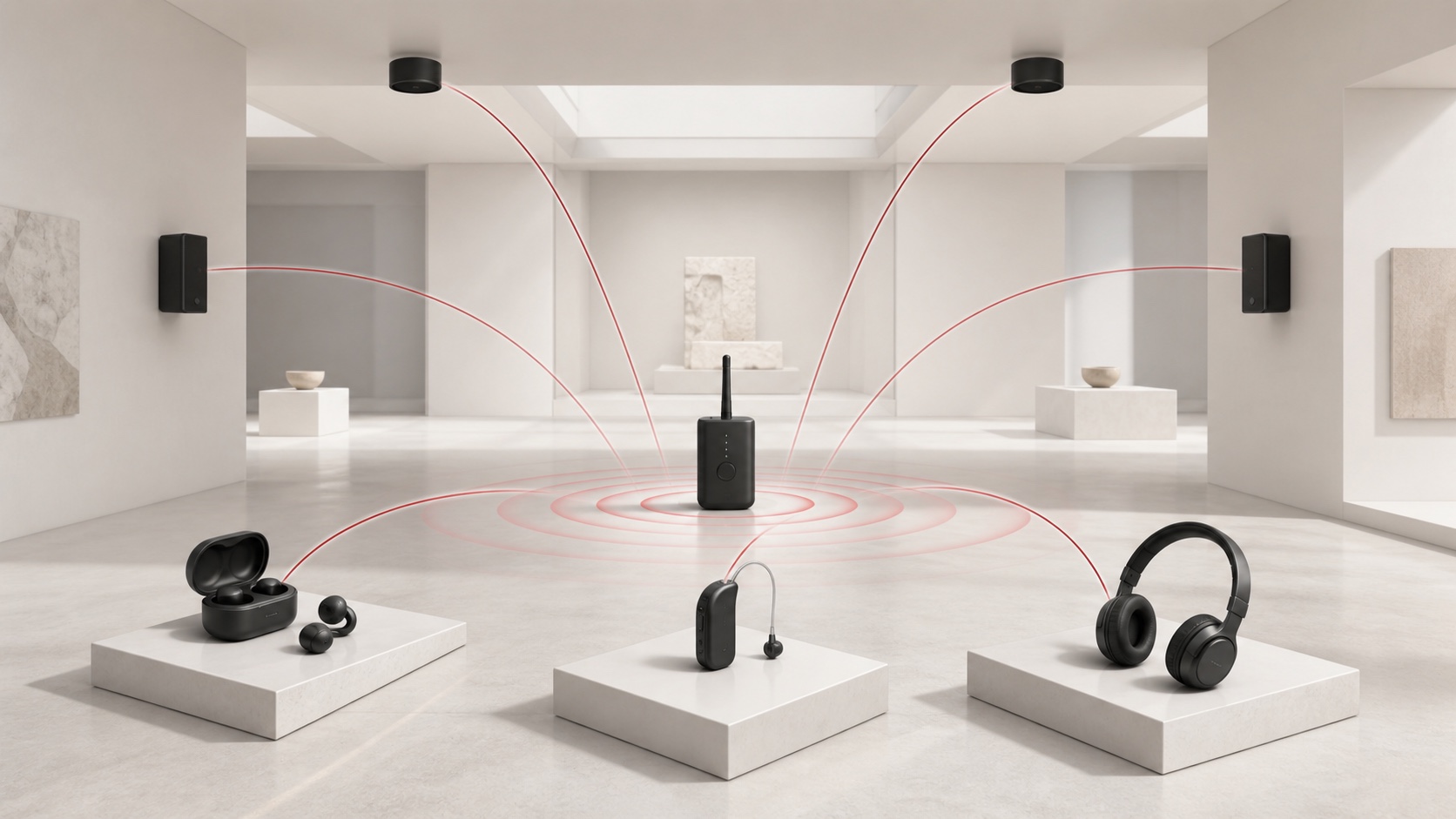
- a museum, conference venue or silent screen needs optional personal listening;
- a presenter or portable source must move within a defined area;
- a temporary installation cannot justify new permanent audio cabling;
- a remote location needs a managed programme feed with a local fallback.
Auracast is relevant to the personal-listening cases above, but every transmitter and receiver must explicitly support the required LE Audio and Public Broadcast Profile features. A Bluetooth version number alone is not enough.
Where a wired path should remain the default
- permanent speaker coverage in several rooms or large public areas;
- routine paging that must reach everyone in a zone;
- equipment racks with several amplifiers and controlled startup requirements;
- systems that need predictable service access and documented fallback;
- emergency, evacuation or voice-alarm functions.
The most useful answer is often a hybrid: a wired PA system covers the room, while wireless provides convenient music input or an optional personal listening channel. This preserves the benefit of wireless without making essential coverage depend on it.
Product examples for local wireless playback
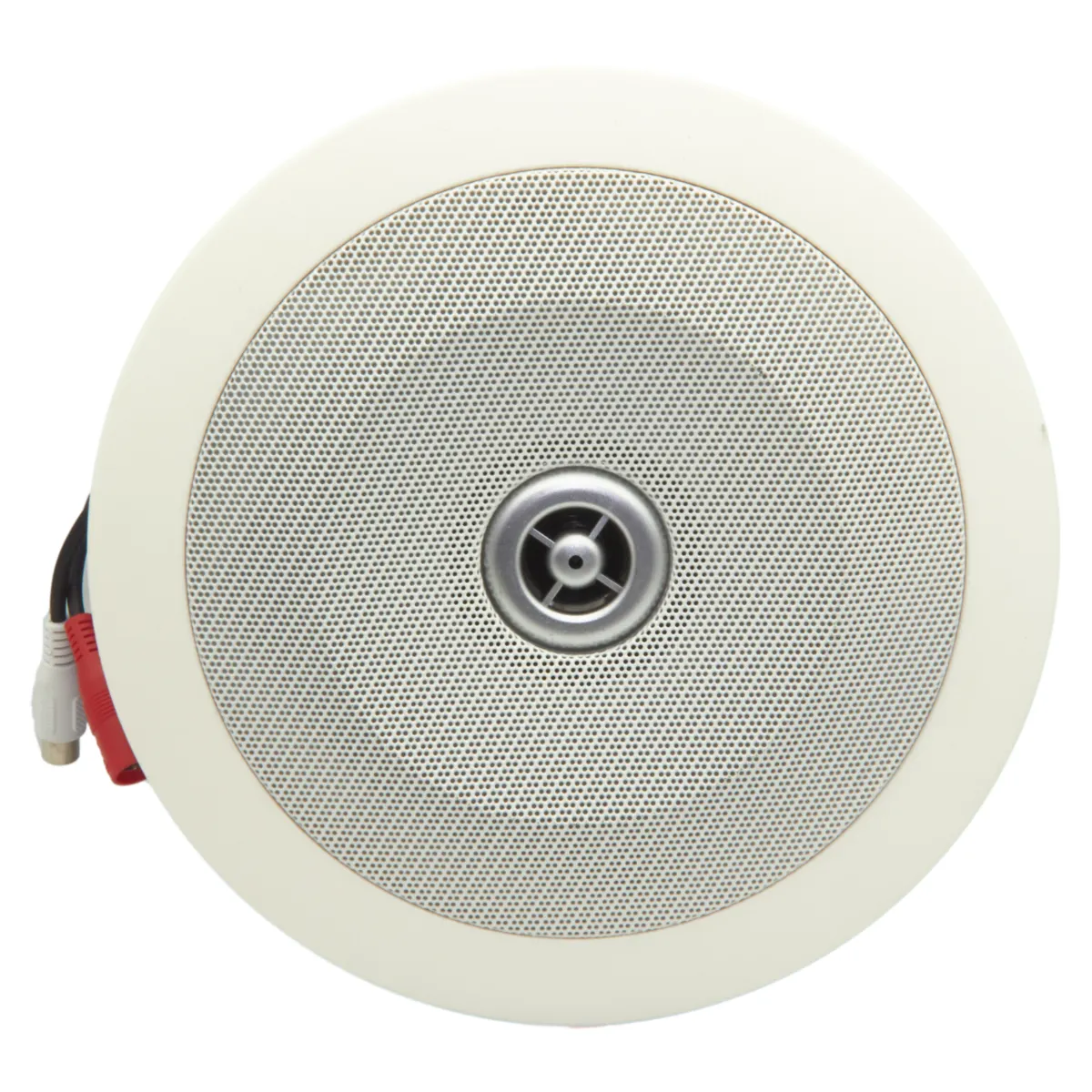
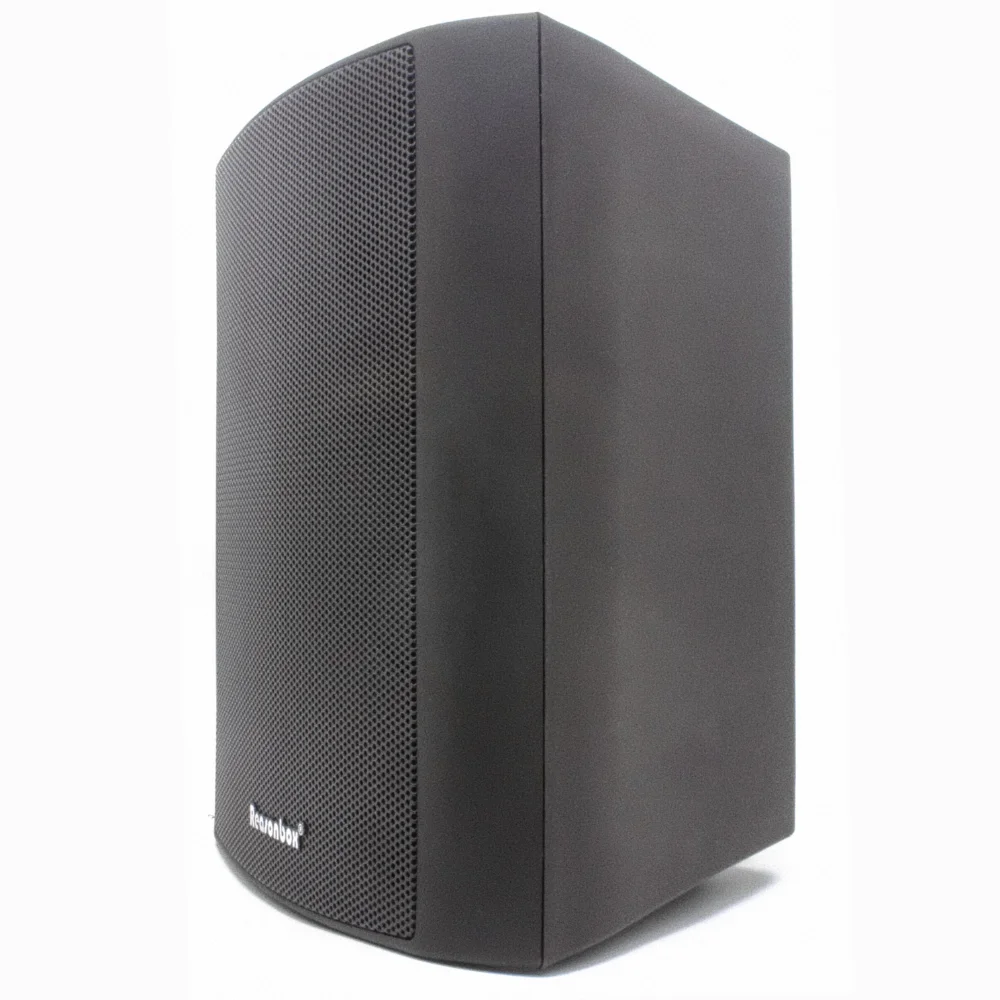
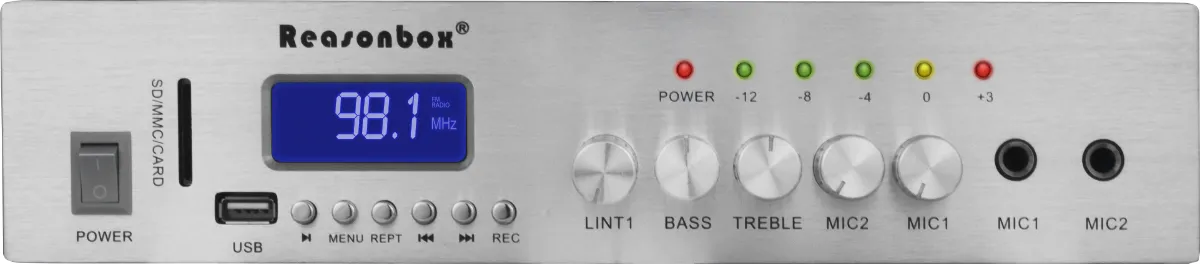
The CSB-200B Bluetooth ceiling speaker, P-401KB Bluetooth active wall speaker and RX-331 mini PA amplifier can support local classic Bluetooth playback. They should not be presented as Auracast transmitters or as replacements for a certified emergency system unless a product specification explicitly says so.
For technology selection across Bluetooth, Auracast, RF, IP and cellular links, read the wireless broadcast system selection guide. For coverage, zones and fallback planning, use the wireless audio engineering layout guide.
Frequently asked questions
Can a wireless speaker system eliminate all cables?
Usually no. Wireless may remove part of the audio signal path, but speakers, transmitters and network equipment still need power and service access. Passive loudspeakers also need an amplifier and speaker cable.
Is Wi-Fi audio always better than Bluetooth?
No. Bluetooth is practical for a nearby source or compatible personal receivers. IP audio is stronger when the project needs managed zones, routing, scheduling and monitoring. Select the architecture from the operating requirement, not from the word “wireless”.
Can wireless audio carry emergency announcements?
Do not assume it can. Emergency and voice-alarm systems may require specific supervision, redundancy, audibility, intelligibility and regulatory approval. Treat that requirement as a separate life-safety design unless the complete system is approved for the intended use.